
Our Latest News


Discord'S Bold Move: Face Scans And Id Checks For Adult Content Access

Discord Ups Its Age Verification Game
Starting in March 2026, Discord is rolling out a major update to its age verification process, requiring users to prove they're adults to access mature content. This global change means face scans and government ID checks are becoming key steps in unlocking age-restricted spaces or altering sensitive content settings. Initially tested in select countries, this expansion aims to create a universal standard across the platform.
Users are increasingly cautious due to privacy concerns following a 2025 security breach involving a third-party contractor. The incident exposed identification images of tens of thousands of users, raising questions about the safety of ID-based systems.
Understanding Discord's Verification Process
A New "Teen by Default" Model
Under this updated system, accounts default to teen settings unless verified as adult. This means most users won't encounter prompts unless they're engaging with age-gated content or trying to change safety settings related to mature material. If you stick to standard chats, you might not notice a difference.
Face Scans: A High-Tech Approach
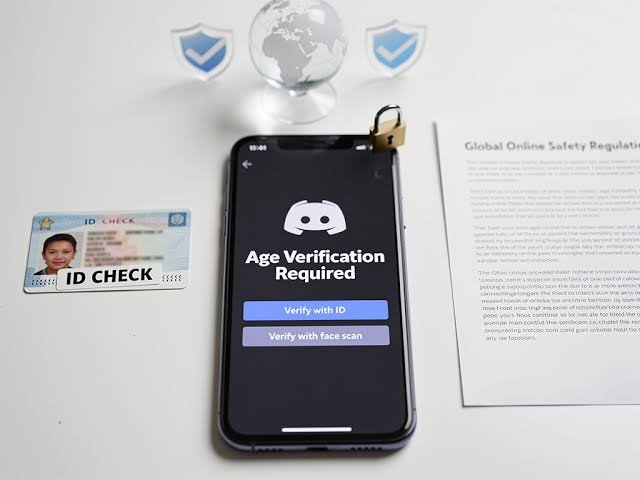
Discord's face scan option uses "facial age estimation." This quick, in-app video selfie doesn't identify users by name but estimates their age. Notably, the scan runs in real-time on your device, and only the age group result is shared with Discord, not the video itself. Despite the platform's assurances, some users still find the process invasive, given it requires camera access for biometric-like checks.
The Role of ID Verification in Discord's Plan
A second verification path involves uploading a government ID. Guided by on-screen prompts, users snap a photo of their ID, which a vendor partner then reviews. While Discord claims these images are swiftly deleted post-verification, the method still involves sharing sensitive personal details.
"For many, the idea of uploading a government ID feels like a big leap in privacy trade-offs," shared a concerned user.
Discord's initiative is largely in response to increasing global regulations and emphasizes a consistent experience for users worldwide. The move aims to align with child safety laws and address regional enforcement inconsistencies.
Bracing for the Change
The platform's initiative is controversial, especially after the 2025 breach incident. Although Discord assures users that it minimizes risks by processing data on-device and deleting images post-verification, the need for IDs inherently elevates security concerns.
If prompted for age verification, you must choose your preferred method. Discord provides retry options and an appeal path if you're misclassified. However, this shift is likely to polarize users, balancing between enhanced security measures and privacy apprehensions.
Key Points to Remember
As March 2026 nears, brace for a worldwide adoption of "teen by default" settings on Discord. You might encounter verification prompts primarily when accessing adult spaces or tweaking certain settings. The face scan aims to assess age without collecting personal information, while ID checks involve sharing government documents with vendor partners.
Given the 2025 breach, the community remains cautious, scrutinizing how Discord plans to handle these privacy-sensitive changes.
Categories:

Author: Imani