
Our Latest News


Exploring The Secret World Of Chrome'S Incognito Mode
The Incognito Phenomenon
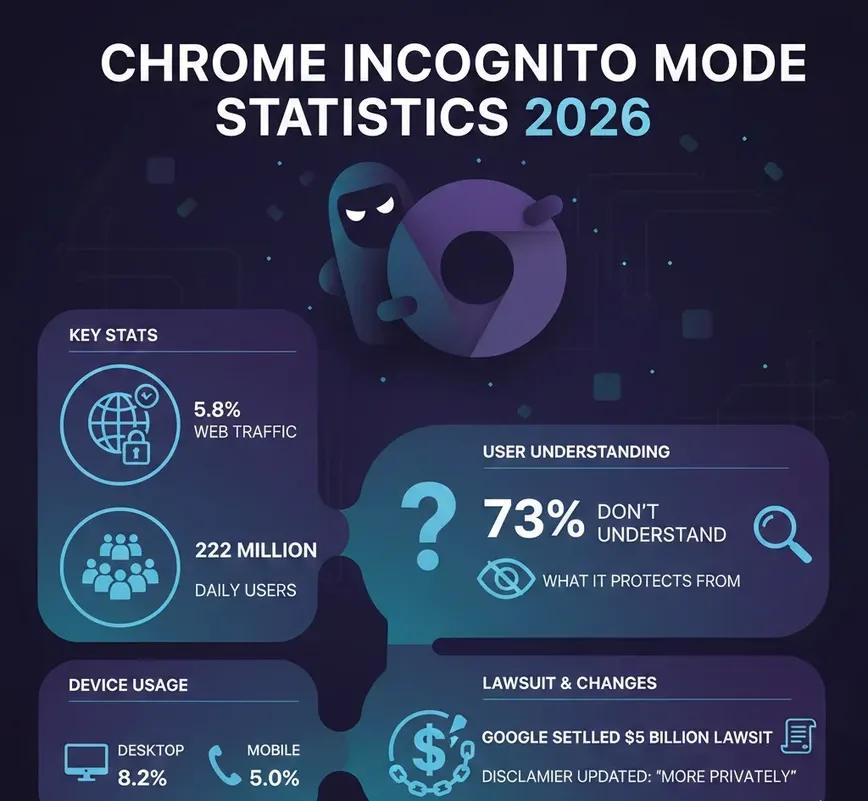
Chrome's Incognito mode is playing a significant role in global web traffic, with a noteworthy 5.8% of all web activity occurring in this private browsing space as of 2025. With Chrome's user base swelling to an estimated 3.83 billion in 2026, this translates to an impressive 222 million users browsing in stealth mode at any given moment. Surprisingly, a UK survey found that 12% of respondents engage in incognito or private browsing daily.
However, despite the growing numbers, many users are still in the dark about what Incognito mode truly offers. A University of Chicago study highlights that 73% of users have misconceptions about its protective capabilities. "It's fascinating how privacy tools are misunderstood," a tech analyst noted, "considering the growing focus on digital privacy."
Understanding Usage Trends
Diving into the demographics, about 20% of internet users have experimented with private browsing. However, regular use is less common, with only 14% of Google users opting for Incognito mode routinely, according to 2025 statistics. This aligns with DuckDuckGo's findings that only a third of those aware of private browsing actually use it. While digital privacy has been in the spotlight, the adoption rate hasn't surged as quickly as some might expect.
Device choice also impacts how users engage with Incognito mode. Desktop users are more inclined to switch to a private window, attributing 8.2% of their web activity to such sessions, as opposed to 5% on mobile devices. This trend may be due to the ease of accessing shortcuts and the more deliberate browsing behaviors associated with larger screens.
Sites and Situations: The Incognito Go-Tos
The sites attracting the most incognito traffic offer a glimpse into user priorities. Adult websites lead the pack, with a 10.3% share of incognito visits, followed by Google Search, which sees 6.2% of its queries coming from private sessions. This is often a tactic for users seeking to keep their search behavior private or to avoid tailored results. YouTube, Reddit, and social media platforms like Instagram and Facebook also see noteworthy levels of private browsing, reflecting users' desire to manage their online footprints.
It's clear that while Incognito mode is popular for adult content and sensitive searches, misconceptions about its capabilities remain widespread. The University of Chicago and Leibniz University of Hanover's research reveals that many users mistakenly believe Incognito protects against malware or hides location data.
The Legal and Practical Side of Incognito
Google's $5 billion class-action lawsuit settlement in 2024 underscored significant gaps in user understanding. The lawsuit accused Google of collecting data from Incognito sessions, affecting millions of users. As part of the settlement, Google updated its disclaimers to clarify what Incognito mode does and doesn't cover, like the fact that user data can still be collected if signed into Google during private sessions.
For those concerned with true anonymity, Incognito mode alone does not suffice. It doesn't hide your IP address or prevent data collection by service providers or employers. Instead, it stops your device from keeping browsing history, cookies, and form entries post-session. For those seeking more security, additional tools and extensions can enhance privacy protection.
Time of Day and Analytical Blind Spots
Users tend to activate Incognito mode at specific times, with notable spikes during lunch breaks, post-work hours, and late evenings. The typical private session lasts about 10 minutes, suggesting these are quick, targeted browsing efforts. Despite its convenience, Incognito use can distort website analytics, as each session appears as a new visitor, skewing data insights.
Even as browsing habits evolve, the persistent myths surrounding Incognito mode's capabilities highlight a broader challenge in digital literacy. As privacy continues to be a hot topic, understanding and using these tools effectively is crucial for all internet users.
Categories:

Author: Cole