
Our Latest News


Google Search Reinvents Itself: Ai Takes The Lead
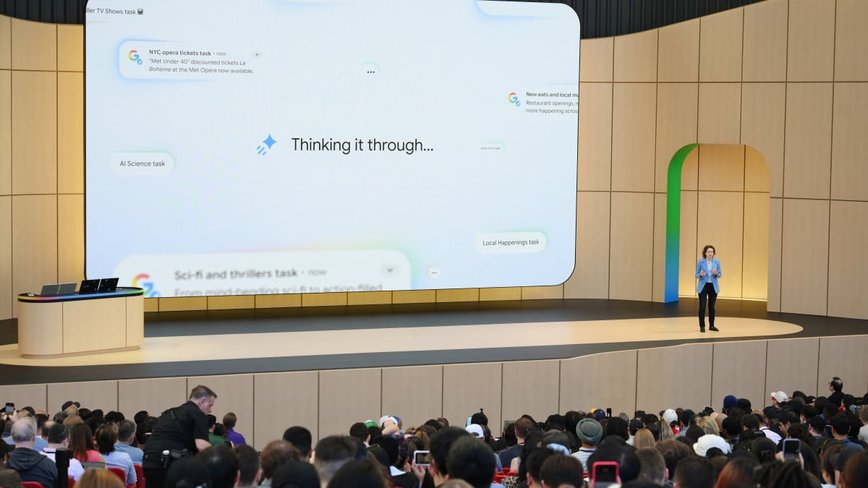
Google's AI Evolution: A New Era for Search
Google Search's transformation was all the buzz at the I/O 2026 conference, where the tech giant unveiled its plans to revolutionize the way we find information. Stepping away from traditional link-based navigation, Google is embracing artificial intelligence with its Gemini platform. This shift is poised to fundamentally alter how we navigate the web – shaping Search into an AI-driven experience that promises to handle queries with greater context and accuracy.
This change is a significant move from the Google Search of the past 20 years. The introduction of AI overview features and the expanded search box signals a departure from keyword-centric searches. Instead, users are invited to interact with Search in a more conversational manner, providing richer context through images, files, and longer prompts.
“Google wants to fundamentally change how we navigate the internet,” remarked Chance Townsend, highlighting the company's ambitious vision.
Publishers Grapple with the AI Challenge
With AI-driven Search agents relentlessly scanning the web, publishers face an existential threat. These changes mean fewer clicks on traditional web pages, as users increasingly rely on AI summaries to get the information they need. This trend has been labeled the "traffic apocalypse," with Google defending that engaged users still click through to sites, though the overall numbers are dwindling.
Publishers like Dotdash Meredith, the company behind People, report substantial traffic decreases since Google's AI implementations began. In response, many are pivoting towards direct-reader engagement strategies, such as newsletters, events, and subscription models, to maintain their audience and revenue streams without relying solely on Google.
AI's Growing Pains: The Accuracy Dilemma
Despite the innovative leap, Google's new AI tools aren't without their flaws. The accuracy of AI-generated content remains a persistent issue. AI Overviews can still present confidently incorrect information, posing risks of misinformation. As Google continues to shift more of its search experience to AI, the burden of fact-checking increasingly falls on the users themselves.
Google's vision for AI includes ambitious features like Spark and Gemini Omni, which hint at a future where AI handles complex tasks and even emulates aspects of human intelligence. However, the company still grapples with ensuring the balance between autonomy and control to prevent AI from overstepping its bounds.
Into the Future: The Path to AGI
One of the more striking revelations at I/O was Google's step toward what some in the AI community refer to as AGI – artificial general intelligence. Google's implementation of the Agent Payments Protocol is a step towards this future, providing a framework for managing AI's growing autonomy. However, the company acknowledges that as AI's capabilities expand, so do the potential risks of errors in a more autonomous system.
Ultimately, Google's deep dive into AI-driven search marks a new chapter in the digital landscape, one that balances innovation with the responsibility of accuracy and user trust. As we move forward, both users and publishers must navigate this evolving space, where AI is set to play an ever-increasing role in our online interactions.
Categories:

Author: Imani